Keynote Speakers

Prof. Laurent David Cohen, French National Centre for Scientific Research, France
Laurent David Cohen was born in 1962. He was student
at the Ecole Normale Superieure , rue d'Ulm in
Paris, France from 1981 to 1985. He received the
Master's and Ph.D. degrees in Applied Mathematics
from University of Paris 6, France, in 1983 and
1986, respectively. He got the Habilitation à
diriger des Recherches from University Paris 9
Dauphine in 1995.
From 1985 to 1987, he was member at the Computer
Graphics and Image Processing group at Schlumberger
Palo Alto Research, Palo Alto, California and
Schlumberger Montrouge Research, Montrouge, France
and remained consultant with Schlumberger
afterwards. He began working with INRIA, France in
1988, mainly with the medical image understanding
group EPIDAURE.
He obtained in 1990 a position of Research Scholar
(Charge then Directeur de Recherche 1st class) with
the French National Center for Scientific Research
(CNRS) in the Applied Mathematics and Image
Processing group at CEREMADE, Universite Paris
Dauphine, Paris, France. His research interests and
teaching at university are applications of Partial
Differential Equations and variational methods to
Image Processing and Computer Vision, like
deformable models, minimal paths, geodesic curves,
surface reconstruction, Image segmentation,
registration and restoration.
For many years, he has been editorial member of the
Journal of Mathematical Imaging and Vision, Medical
Image Analysis and Machine Vision and Applications.

Prof. Chin-Chen Chang (IEEE Fellow), Feng Chia University, China
Professor C.C. Chang obtained his Ph.D. degree in
computer engineering from NCTU. He's first degree is
Bachelor of Science in Applied Mathematics and
master degree is Master of Science in computer and
decision sciences. Both were awarded in NTHU. Dr.
Chang served in NCCU from 1989 to 2005. His current
title is Chair Professor in Department of
Information Engineering and Computer Science, Feng
Chia University, from Feb. 2005.
Prior to joining Feng Chia University, Professor
Chang was an associate professor in Chiao Tung
University, professor in NCHU, chair professor in
NCCU. He had also been Visiting Researcher and
Visiting Scientist to Tokyo University and Kyoto
University, Japan. During his service in Chung
Cheng, Professor Chang served as Chairman of the
Institute of Computer Science and Information
Engineering, Dean of College of Engineering, Provost
and then Acting President of Chung Cheng University
and Director of Advisory Office in Ministry of
Education.
Professor Chang's specialties include, but not
limited to, data engineering, database systems,
computer cryptography and information security. A
researcher of acclaimed and distinguished services
and contributions to his country and advancing human
knowledge in the field of information science,
Professor Chang has won many research awards and
honorary positions by and in prestigious
organizations both nationally and internationally.
He is currently a Fellow of IEEE and a Fellow of
IEE, UK. On numerous occasions, he was invited to
serve as Visiting Professor, Chair Professor,
Honorary Professor, Honorary Director, Honorary
Chairman, Distinguished Alumnus, Distinguished
Researcher, Research Fellow by universities and
research institutes. He also published over 1,100
papers in Information Sciences. In the meantime, he
participates actively in international academic
organizations and performs advisory work to
government agencies and academic organizations.
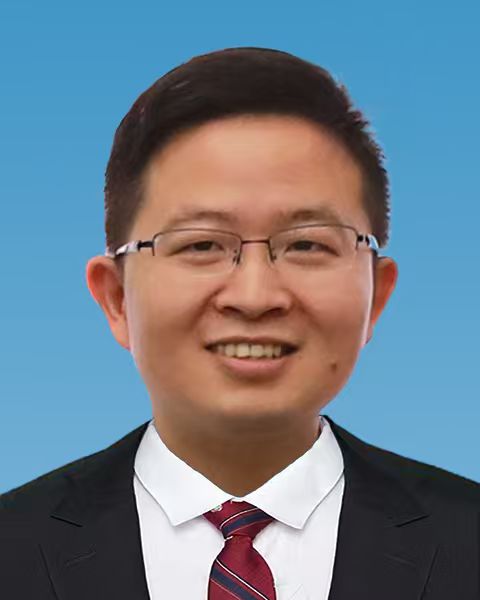
Prof. Weijia Zhang, Shaoxing University, China
Weijia Zhang received his Ph.D. and served as a
Clarendon Scholar at the University of Oxford. He is
currently a Professor at Shaoxing University, a
National Distinguished Expert, an Innovation Talent
of the Ministry of Science and Technology, and a
Fellow of the Royal Astronomical Society (FRAS). In
teaching, he has led multiple teaching reform
projects. As a primary supervisor, he has guided
students to win one gold and one silver award in the
National Postgraduate Artificial Intelligence
Competition, as well as 15 first prizes in
provincial Category A and above competitions. His
research focuses on electronic information
technology and artificial intelligence. He has
authored over 70 SCI/EI-indexed journal papers,
including publications in Science Bulletin, and
holds nearly 20 patents and more than 30 software
copyrights. He has secured three provincial and
ministerial-level science and technology awards as
the principal researcher and has accumulated over
100 academic achievements in total. He also serves
as a reviewer for multiple academic journals, such
as GRL. His notable honors include the Zhejiang May
4th Youth Medal (2019), the First Cohort of
Top-Notch Talents in Zhejiang Provincial
Universities (2020), and the Zhejiang Qinghonghu
Youth Award (2021). He was selected into the
National Science and Technology Expert Database as a
review expert for China’s National Key R&D Program
in 2022 and won the First Prize of the National
Commercial Science and Technology Progress Award as
the leading contributor in 2025.
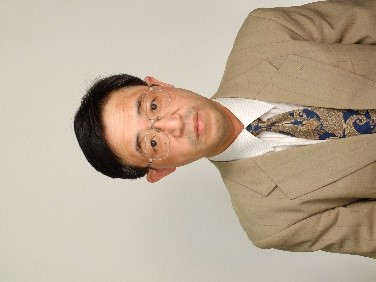
Prof. Hiroyuki Kudo, University of Tsukuba, Japan
Dr. Hiroyuki Kudo received the B.Sc. degree from the
Department of Electrical Communications, Tohoku
University, Japan, in1985, and the Ph.D. degree from
the Graduate School of Engineering, Tohoku
University, in 1990. In 1992, he joined the
University of Tsukuba, Japan. He is currently a
Professor with the Institute of Systems and
Information Engineering, University of Tsukuba,
Japan. His research areas include medical imaging,
image processing, and inverse problems. In
particular, he is actively working on tomographic
image reconstruction for X-ray CT, PET, SPECT, and
electron tomography. He received best paper awards
more than 20 times from various international and
Japanese societies. He received the IEICE (The
Institute of Electronics, Information, and
Communication Engineers, Japan) Fellow award for his
contributions on “cross-sectional image
reconstruction methods in medical computed
tomography”. In 2018, he obtained Commendation for
Science and Technology by the Minister of Education,
Culture, Sports, Science and Technology for his
contributions on “research on design method and
image reconstruction method for new CT”. For
2011-2016, he was an Editor-in-Chief of the Journal
of Medical Imaging Technology (MIT). For 2020-2024,
he was a president of Japanese Society of Medical
Imaging Technology (JAMIT).
Invited Speakers
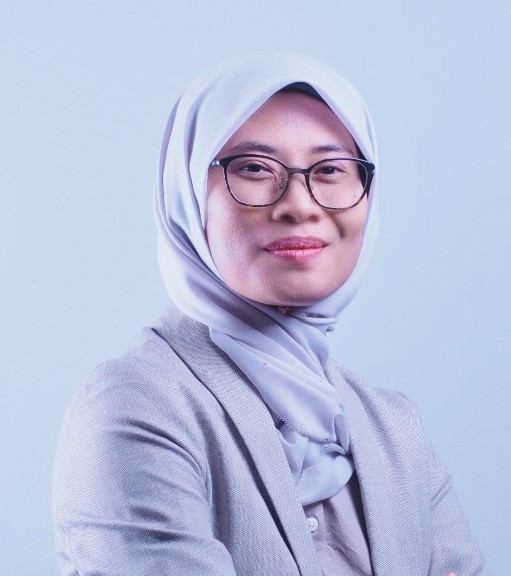
Assoc. Prof. Aslina Baharum, Sunway University, MALAYSIA
Associate Professor Ts. Dr. Aslina Baharum (Dr. Ask)
holds the esteemed position of Associate Professor
at the School of Engineering and Technology within
Sunway Uni-versity. Previously, she has served as a
Senior Lecture at the Faculty of Computer and
Mathematical Sciences in Universiti Teknologi MARA
(UiTM), and as a Senior Lecturer at the Faculty of
Computing and Informatics in Universiti Malaysia
Sabah (UMS), where she led the User Experience (UX)
research group. Completing her academic journey, she
also brings valuable industry experiences as a
former IT Officer at the Forest Research Insti-tute
of Malaysia (FRIM). She had experienced more than 20
years in the IT field.
She earned her PhD in Visual Informatics from UKM, a
Master Science degree in IT from UiTM, and Bachelor
of Science (Hons.) in E-Commerce from UMS. Dr. Ask
is an active member of the Young Scientists Network
- Academy of Science Malaysia, a Senior Mem-ber
IEEE, and a certified Professional Technologist
recognized by MBOT. She has further contributed to
the field by serving as an auditor for MBOT/MQA.
She has received medals at research and innovation
showcases and has been honored with awards for her
teaching, excellence in service, and outstanding
contributions as a researcher. Her bibliography
showcases her prolific output, including co-authored
and co-edited books, over 20 book chapters,
technical papers presented at conferences, and more
than 60 peer-reviewed and indexed journals
publications. She has also taken on editorial roles
for several journals and actively participated as a
committee member, ses-sion chair, and part of
editorial teams while actively participating as a
reviewer. Dr. Ask has graced numerous conferences
with her wisdom, delivering keynote, invited and
ple-nary talks.
Her research interests span a wide spectrum,
encompassing UX/UI, HCI/Interaction De-sign, Product
& Service Design, Software Engineering & Mobile
Development, Infor-mation Visualization & Analytics,
Multimedia, ICT, IS and Entre/Technopreneurship. Dr.
Ask’s expertise extends beyond the academic realm;
she imparts her knowledge through workshops and
talks on various subjects, including UI/UX,
Entrepreneurship, Vid-eo/Image Editing,
E-Commerce/Digital Marketing, STEM, Design Thinking
and etc.
Furthermore, she is certified as a Professional
Entrepreneurial Educator, Executive En-trepreneurial
Leader, and HRDF Professional Trainer, which
highlights her strong com-mitment to education and
entrepreneurship. Dr. Ask is highly regard in her
field, dedicat-ed and consistently pushing the
boundaries of knowledge and sharing her wealth of
ex-pertise with others.
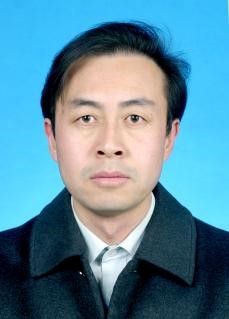
Prof. Xiwen Zhang, Beijing Language and Culture University, China
XiWen Zhang is currently a full professor of Digital
Media Department, School of Information Science,
Beijing Language and Culture University.
Prof. Zhang worked as an associated professor from
2002 to 2007 at the Human-computer interaction
Laboratory, Institute of Software, Chinese Academy
of Sciences. From 2005 to 2006 he was a Post doctor
advised by Prof. Michael R. Lyu in the Department of
Computer Science and Engineering, the Chinese
University of Hong Kong. From 2000 to 2002 he was a
Post doctor advised by Prof. ShiJie Cai in the
Computer Science and Technology department, Nanjing
University.
Prof. Zhang's research interests include pattern
recognition, computer vision, and human-computer
interaction, as well as their applications in
digital image, video, and ink. Prof. Zhang has
published over 60 refereed journal and conference
papers. His SCI papers are published in Pattern
Recognition, IEEE Transactions on Systems Man and
Cybernetics B, Computer-Aided Design. He has
published more than twenty EI papers.
Prof. Zhang received his B.E. in Chemical equipment
and machinery from Fushun Petroleum Institute
(became Liaoning Shihua University since 2002) in
1995, and his Ph.D. advised by Prof. ZongYing Ou in
Mechanical manufacturing and automation from Dalian
University of Technology in 2000.

Assoc. Prof. Muhammad Tariq Mahmood, Korea University of Technology and Education, Korea
He received the MCS degree in computer science from AJK University of Muzaffarabad, Pakistan, in 2004. After That he worked as a Software Engineer for more than 8 years at Khaksar and Co. Islamabad Pakistan. Then, in 2005, he made a significant shift in his career by leaving software development and by joining various institutes for his higher studies and research. He received the MS degree in intelligent software systems from Blekinge Institute of Technology, Sweden, in 2006 and the PhD degree in information and mechatronics from Gwangju Institute of Science and Technology, Korea, in 2011. Now, he is working as an Associate Professor at School of Computer Science and Engineering, Korea University of Technology and Education, Cheonan, Korea. His research interests include image processing, 3D shape recovery from image focus, computer vision, pattern recognition and machine/deep learning. Currently, he is working on various projects funded by National research foundation (NRF), Korea related to shape from focus/defocus, smart cities and underwater imaging.
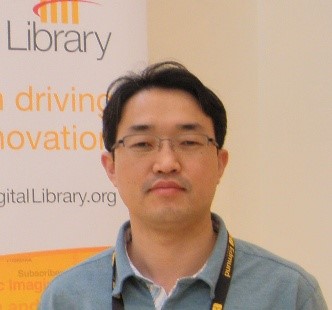
Assoc. Prof. Seokwon Yeom, Daegu University, Korea
Seokwon Yeom has been a faculty member of Daegu
University since 2007. He has a Ph.D. in Electrical
and Computer Engineering from the University of
Connecticut in 2006.
He has been a guest editor of Applied Sciences and
Drones in MDPI since 2019. He has served as a board
member of the Korean Institute of Intelligent
Systems since 2016, and a member of the board of
directors of the Korean Institute of Convergence
Signal Processing since 2014. He has been program
chair of several international conferences. He was a
vice director of the AI homecare center and a head
of the department of IT convergence engineering at
Daegu University in 2020-2023, a visiting scholar at
the University of Maryland in 2014, and a director
of the Gyeongbuk techno-park specialization center
in 2013. He has been a keynote or invited speaker at
several international conferences.
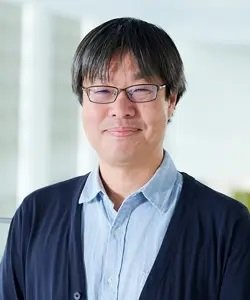
Assoc. Prof. Kazuya Ueki, Meisei University, Japan
He received a B.S. in Information Engineering in
1997, and an M.S. in the Department of Computer and
Mathematical Sciences in 1999, both from Tohoku
University, Sendai, Japan. In 1999, he joined NEC
Soft, Ltd., Tokyo, Japan. He was mainly engaged in
research on face recognition. In 2007, he received a
Ph.D. from Graduate School of Science and
Engineering, Waseda University, Tokyo, Japan. In
2013, he became an assistant professor at Waseda
University. He is currently an associate professor
in the School of Information Science, Meisei
University. His current research interests include
pattern recognition, video retrieval, character
recognition, and semantic segmentation. He is
currently working on the video retrieval evaluation
benchmark (TREVID) sponsored by the National
Institute of Standards and Technology (NIST),
contributing to the development of video retrieval
technology. In 2016, 2017, and 2022, his submitted
systems achieved the highest performance in the
TRECVID AVS task.